Alumni Artist Talk 2025: Dayana Camposeco
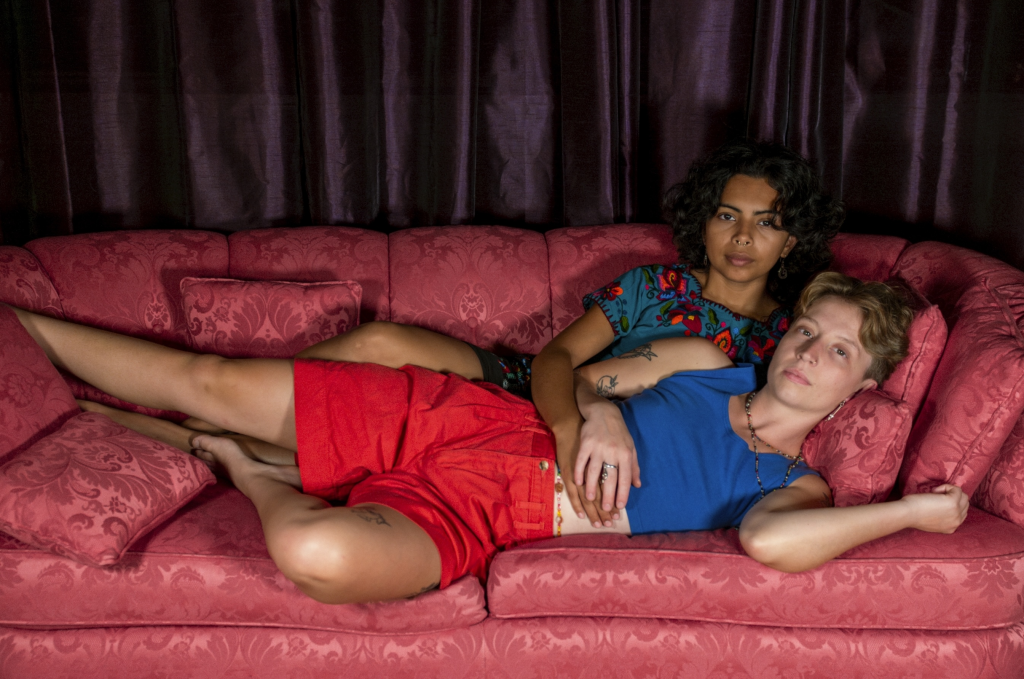
Dayana Camposeco, a CFCC graduate who has gone on to study at UNCW, holds photography as an important practice in exploration of “identity, belonging, and the intimate narratives that shape queer experience in the American South.”
“Through intimate portraiture, I invite viewers into a shared space of vulnerability, trust, and celebration,” they said. “Queer art serves as both a beacon of visibility and an act of resistance that challenges normative representations by highlighting the beauty and complexity of queer relationships and identities.”
In this large photographic print titled Pynk, a queer couple can be seen reclining in clothing that reflects their cultural heritage from Guatemala and the deep South of North Carolina’s Piedmont. In wearing these garments in this relaxed pose while confronting the viewer with their gaze, each participant is honoring their respective countries of origin. The careful selection and interaction of the textiles between the two sitters is emblematic of how love and culture can be woven together to form what Camposeco calls “living, complex histories.”
Through all of their work, Camposeco aims to “reclaim space for stories of love, migration, and queerness; narratives that have long been overlooked or deliberately erased from historical records, silenced by systemic discrimination and cultural invisibility.”
“My time studying at Cape Fear Community College under the mentorship of professors like Jen Mace and Ben Billingsley deepened my understanding of visual storytelling and the power of art to reveal nuanced truths,” they said. “This experience sharpened my commitment to portraying authentic moments of connection and resilience, emphasizing the dignity and humanity often overlooked in mainstream representations.”
Currently studying Art Communications and Journalism at UNCW, they also work as an active member of the community for two nonprofits: the Cameron Art Museum and Shoresides, a local journalism podcast that serves the coastal region. “Being in these creative environments showed me the power of collaboration and storytelling,” they said. “I see how art and journalism work hand in hand to amplify voices and preserve cultural memory that eventually leads to social change.”
Pynk is just one reflection of this practice and intention. For Camposeco, its critical that more than struggle be portrayed. In their work, they strive to “create moments of trust and spaces where people feel safe enough to be vulnerable but also proud enough to celebrate.”